
You know more about the car you want than you think.
It can be easier to describe a drive you enjoyed than to name the car you should buy next. You remember feeling where the front wheels were pointing, or getting out after a long trip without wanting a break from the seat. Those memories are a useful starting point, even before you have a shortlist.
Think about the car you live with now. What would you miss, and what are you ready to leave behind? You might appreciate the view out, yet wish the car gave you more to do on a favourite road. Wanting something small and playful is already a useful brief. You can work out the details without knowing every possible candidate.
A point of view gives the search direction
A make and model can be a perfectly good place to start, especially if you have wanted a particular car for years. When the answer is less obvious, try describing what you want from the drive. You may already know you want:
- Steering that helps you feel what the front wheels are doing.
- Enough comfort to enjoy the car on an ordinary working day.
- A manual gearbox because changing gear is part of the pleasure.
- A shape you will still stop to look at after parking.
Revorance's Personas give those priorities a starting perspective. Driver's Car First puts involvement near the centre of the question. Daily Driver with Character gives everyday usability more room alongside driving enjoyment. Choosing one gives discovery direction without requiring you to settle every preference first.
A Persona gives the search a point of view. You decide how well that view serves you.
You can choose a different perspective as your priorities become clearer. Caring about steering feel does not mean agreeing to an uncomfortable commute. The useful question is how much of each quality you want in the car you will actually use.
Real cars make the compromises clearer
Some preferences become firmer when you look at actual cars. If changing gear yourself is part of the reason for buying, an appealing automatic may still leave the central wish unanswered. Other compromises become easier to accept. A smaller boot might be manageable once you think through what you carry, rather than comparing capacity figures in isolation.
As you look through available cars, give yourself a simple way to distinguish an attractive listing from a useful possibility:
- Name the appeal. Be specific about what made you stop and look.
- Picture the ordinary drive. Consider where and how often you would use it.
- Revisit the compromise. Decide what you could live with and what would spoil the experience.
This is something you work out as you go. A photograph can draw you in, but it cannot tell you whether a seat fits or a car feels right on your roads. Keep those questions open until you have a chance to answer them. Discovering that you want a little more comfort is useful progress, even if it takes a favourite candidate off the list.
There is room for more than one answer
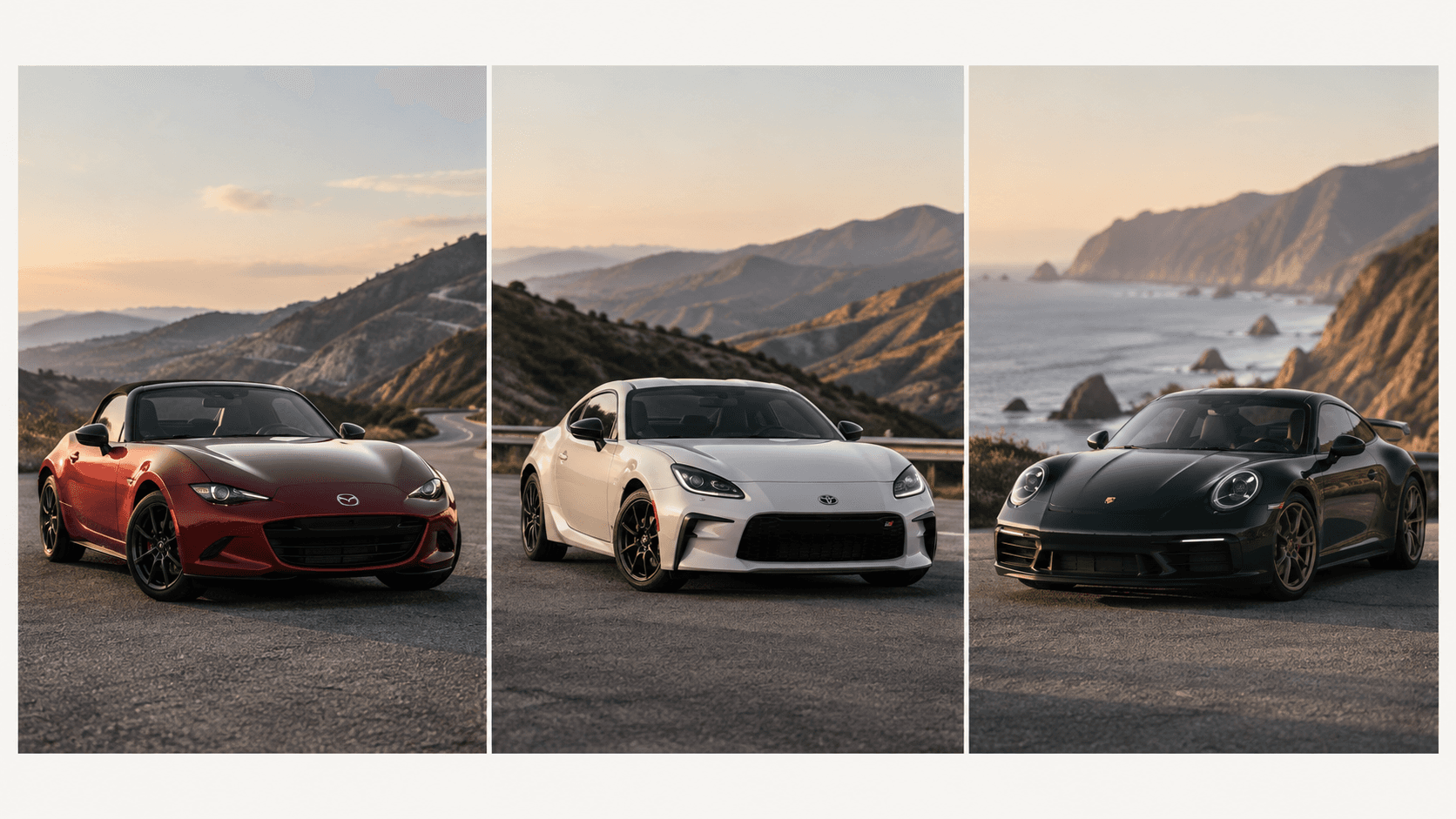
A Mazda MX-5 Miata and a Porsche 911 can both enter a conversation about involvement. What attracts you to each deserves a closer look. Budget, running costs, and the attention you want to give ownership belong in that comparison too. An attainable car you look forward to driving deserves serious consideration; an expensive car can justify a long-held fascination. Enthusiast interest has room for both.
Your first idea may hold up well, or another car may help you understand it better. You are allowed to keep the same model in mind and change the compromises you will accept. Take notice when one car keeps pulling you back, then spend a little time working out why. That is worth knowing even if your next car is the one you wanted all along.